


In most cases, yes, a landlord can enter your apartment while you are at work in USA, but only if certain rules are followed. They usually need a valid reason and must give proper notice before entering, even if you are not home.
The basic rule explained simply
Your apartment is your private space, even though you rent it. A landlord cannot just walk in whenever they want.
In most states, landlords are required to give advance notice before entering. This notice is meant to inform you, not to ask for your approval.
If you are at work, the landlord can still enter as long as they follow the legal rules.
When a landlord is usually allowed to enter
Landlords are generally allowed to enter for reasonable and necessary reasons related to the property. Common reasons include:
- Repairs or maintenance
- Routine inspections
- Showing the unit to future tenants or buyers
- Checking safety issues
- Required inspections by law
The entry must be connected to managing or maintaining the apartment.
Notice rules you should understand
Most states require some form of advance notice before a landlord enters. The exact details depend on the state, but notice is usually:
- Given verbally or in writing
- Provided a reasonable amount of time ahead
- Scheduled during normal daytime hours
If proper notice is given, the landlord does not need you to be home. Being at work does not block a legal entry.
Emergencies are treated differently
In an emergency, a landlord can usually enter without any notice. Emergencies are situations where waiting could cause harm or serious damage.
Examples include:
- Fire or smoke
- Major water leaks or flooding
- Gas leaks
- Strong odors that suggest a serious problem
In these situations, the landlord does not need permission and does not have to wait for you to return from work.
When entry may cross the line
There are times when a landlord entering your apartment may be improper or illegal.
This can include situations where:
- No notice was given and there was no emergency
- The reason for entry was not valid
- The landlord enters too often without a good reason
- Entry is used to pressure, intimidate, or harass
Using access to control or disturb a tenant may violate tenant protection laws.
Can you refuse entry if you are not home
Usually, you cannot refuse entry just because you are at work. If the landlord gave proper notice and has a valid reason, they can enter even if you are away.
That said, you can often:
- Ask to reschedule for a different time
- Request entry during certain hours
- Ask for notice in a specific way, if state law allows
Many landlords are flexible, especially for non urgent matters.
Locks and safety concerns
Landlords usually have the right to keep a key to your apartment. Changing the locks without permission may break your lease.
Still, landlords are expected to act responsibly. In most states, they should:
- Knock before entering
- Clearly announce themselves
- Lock the door when leaving
If security is a concern, you can ask the landlord to let you know after they enter or explain what was done.
Why state laws matter
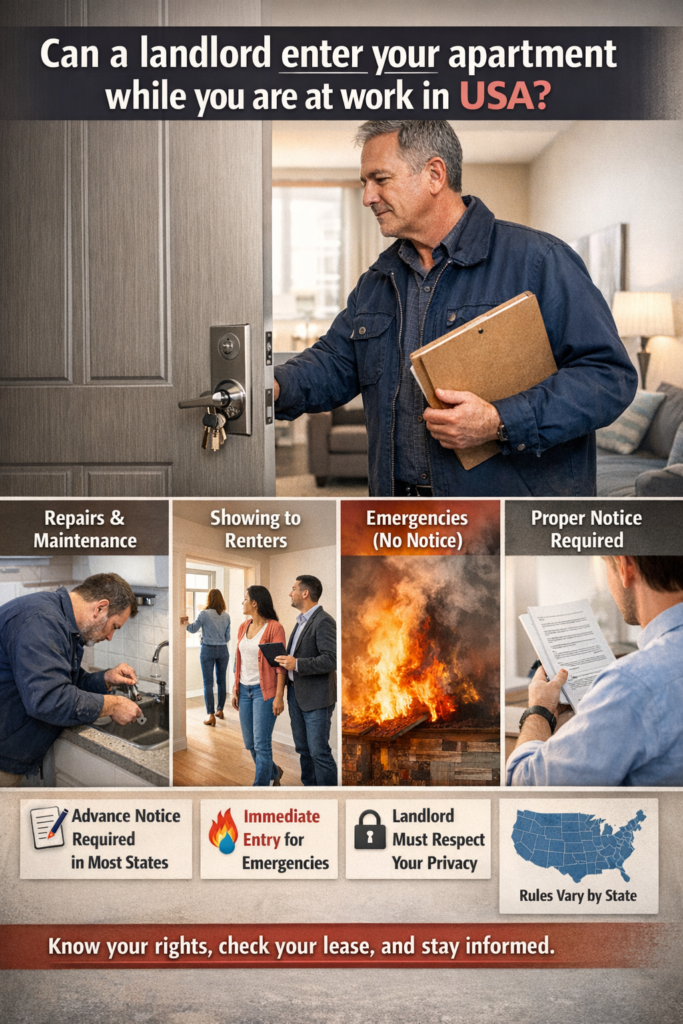
Rules about landlord entry are mostly set by state law. This means notice periods and entry rules can be different depending on where you live.
Some states offer stronger tenant protections, while others give landlords more leeway. Local or city rules may also apply.
Because of this, something allowed in one state may not be allowed in another.
What to do if you are unsure
If you are worried about a landlord entering while you are at work, a few steps can help:
- Review your lease for entry rules
- Check your state or local tenant laws
- Ask your landlord to explain their notice policy
- Keep records of notices and entries
Clear communication often prevents problems. If something feels excessive or inappropriate, keeping a record is usually a smart move.
Frequently Asked Questions
Yes, in most cases a landlord can enter even if you are not home, as long as they give proper notice and have a valid reason. Being at work does not stop a lawful entry.
Generally, no. A landlord usually needs to give notice, not get permission. If notice is given correctly, they can enter without you approving it.
Notice requirements vary by state. In many states, landlords must give reasonable advance notice before entering, usually during normal daytime hours.
Yes. In emergencies like fire, flooding, or gas leaks, landlords can enter without notice to prevent damage or danger.
In most cases, no. If the landlord gave proper notice and has a valid reason, they can enter even if you are not home. You can often ask to reschedule if the issue is not urgent.
Generally, no. Entry must be for a legitimate reason, such as repairs, inspections, or showings. Random or frequent entries without a clear purpose may not be allowed.
Yes. Landlords usually have the right to keep a key for maintenance and emergencies. Changing the locks without permission may violate your lease.
You can review your lease, check your state tenant laws, and keep records of each entry. If the behavior feels excessive, clear communication is usually the first step.
Yes. Landlord entry laws are mostly set by state law, and local rules may also apply. What is allowed in one state may not be allowed in another.
